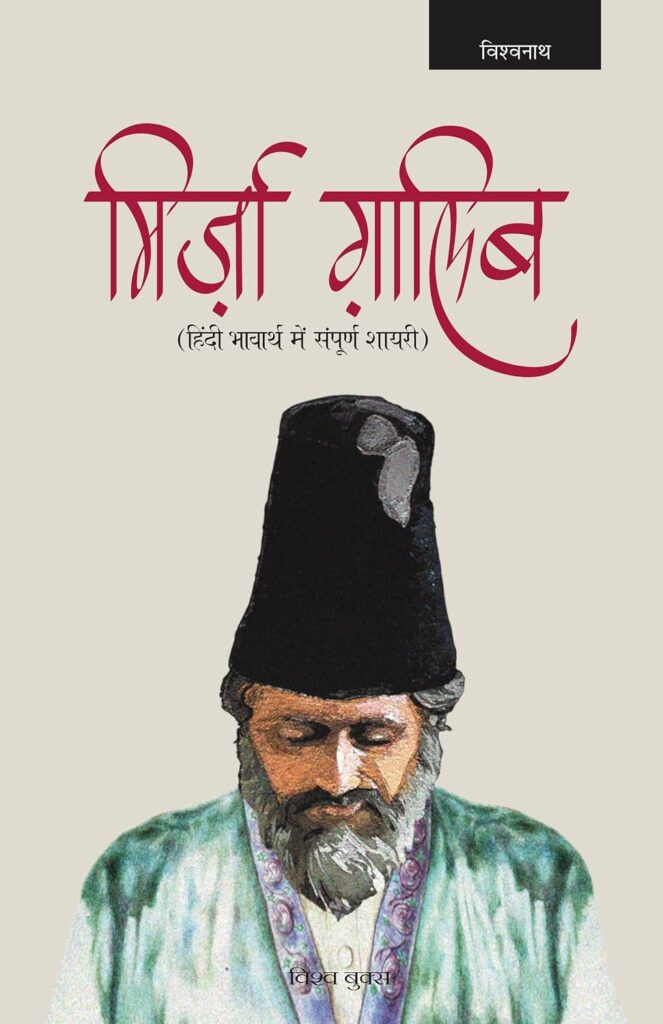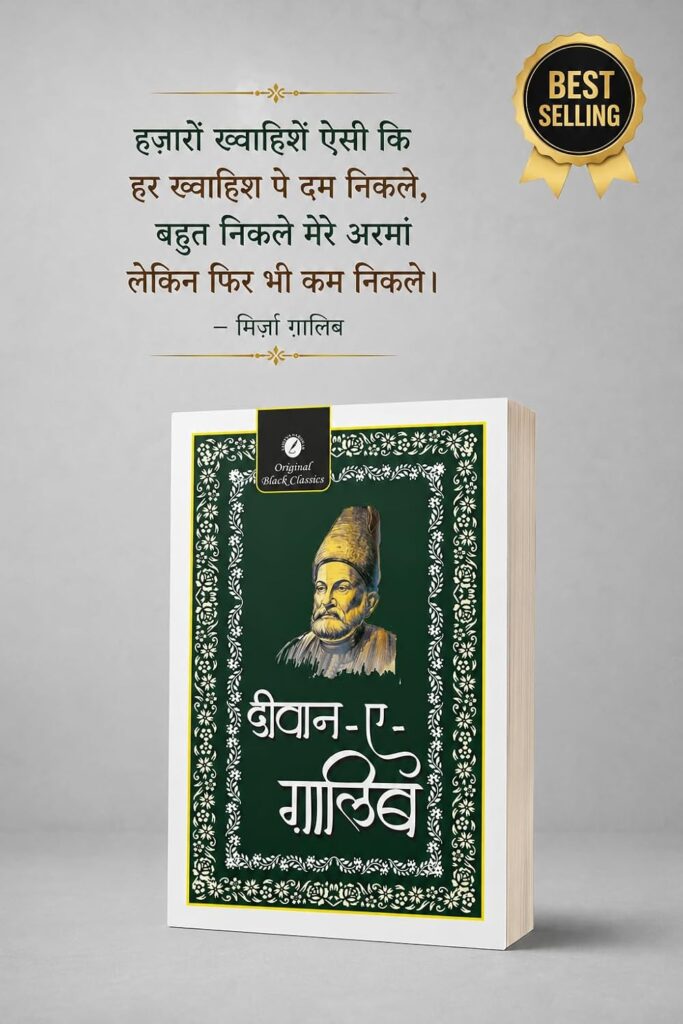





A love song written by the legendary lyricist, Gulzar consisting of the words, ‘Ballimaran se Daribe talak’ described how far the news about the protagonist’s love for his beloved had geographically flown around the streets of Purani Dilli (Old Delhi). Mirza Ghalib who breathed his last at a rented apartment in Ballimaran in Chandni Chowk, Old Delhi remains as of one Gulzar’s most valued inspirations.
Deeper research into Ballimaran revealed that one could find wide varieties of imported spectacle frames both original and first copies at economical prices. This drew us to explore the place on a hot and humid Sunday afternoon.
The rickshaw ride taking us through a short distance between the parking lot to the car-free zone was expensive, but his demands were readily accepted.
First, a traveller’s account
The streets in Ballimaran were less crowded unlike the other days. The bread seller had different home baked varieties on display on the front part of the shop, while many buyers flocked there, a musical instruments shop on the opposite side of the narrow lane was completely dark. An expressionless old, bearded man sat next to a set of tablas quietly looking on the ground, unaffected with the absence of buyers at his door.
The narrow streets of Ballimaran with container-sized shops crammed against one another on both sides, could only be admired on foot. The cycle rickshaws and two-wheelers are the mode of transport to wade through the thinly strip sized lanes.
Each shop bore a unique name with a few using neon lights to attract buyers in the daytime. The shopkeepers sat inside their tiny spaces behind floor length wooden desks patiently for the arrival of the prospects. Many of them were non-air conditioned with an open entrance overlooking the lane. Small water bottles and sometimes paper cups of hot tea were offered by the shop owners as a symbol of their hospitality.
The Ordinary Delhi that Mirza Ghalib Must’ve Seen
The vegetable and fruit vendors decorated their articles at the edge of the lanes, while the snack and lunchrooms displayed varieties ranging from kachoris to biryanis on their front porch. Walking across these outlets, emitting different aroma and flavours, tingled the taste buds leaving the mind confused about the right selection.
The watch repair man sitting on a small stool with minute sized instruments and tools displayed his skills in the open air while pan masala eaters and cigarette smokers queued outside a kirana shop behind him.
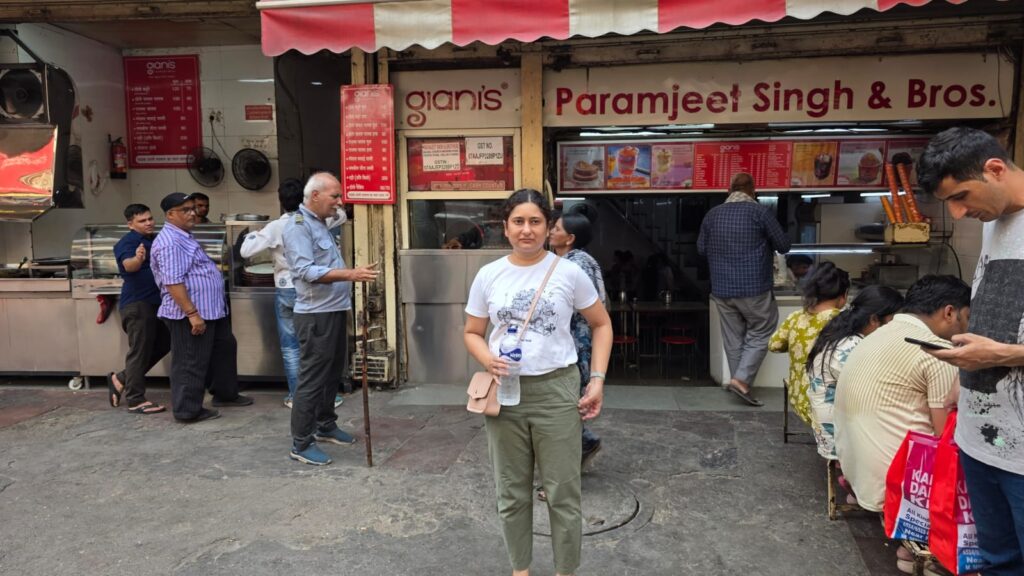
The masala market with spices sourced from various parts of the country was buzzing with people. The same set of spices were differently priced based on its quality, psychologically baiting the customers into choosing the premium ranges for the best quality.
These were stacked neatly in glass jars giving clear view on the colours, shapes, and sizes. The lychee seller was offering peeled lychees to customers to assess the sweetness while the oldest restaurant set up by a Pakistani immigrant had its chole bhatura, lassi, falooda and ice-creams sell like hot cakes without any promotional efforts. All of this embodied an old city charm where one could touch and feel everything before making a buying decision.
Its famous imported spectacle frames offered by shops with ample varieties to choose from, one of which conducted a thirty-minute eye test from a German machine, bought and installed by only seven clinics in India gave a delightful experience. The eye specialist had undergone a training in Germany to operate the machine and obliged us with his personal attention on his off-work day.
Ballimaran has something for everyone. Even window shopping or just aimlessly walking on the streets feel vibrant and enriching.
Now, for the lovers of Mirza Ghalib’s words
Mirza Ghalib’s haveli served space for shops, coal storage, a wedding venue, heater manufacturing workshop after his death. The government acquired a portion of the haveli in 1999 and renovated it into a heritage site as “Ghalib ki Haveli” to honour the Urdu and Persian poet’s life.
This portion, the ground floor was developed into a museum consisting of his writings, books, letters, antique clothes, and artifacts along with his information about his life’s history. The upper floor remains privately owned and operated as a guest house.
The haveli offering a public view of its ground floor, is situated across a narrow lane behind a mosque and overlooking a temple. On this hot afternoon, this lane was empty. Held between small shops, the entrance had large wooden door frames laid open on opposite sides of the structure of bricked walls.
The entrance was not very flattering, and can go unnoticed, if one is inattentive on the road. We reached with the help of the guidance from the locals. A plastic chair at the entrance was empty and the entry was free.
The space was illuminated with the natural sunlight and a few low watt light bulbs. We were the only ones inside the silent museum admiring Mirza Ghalib’s life-size sculpture surrounded by hand-written books and heavily embroidered achkans protected inside glass cabinets. The display cabinets illuminating Ghalib’s eventful life spanning into different towns and cities highlighted a few unique pieces about his life.
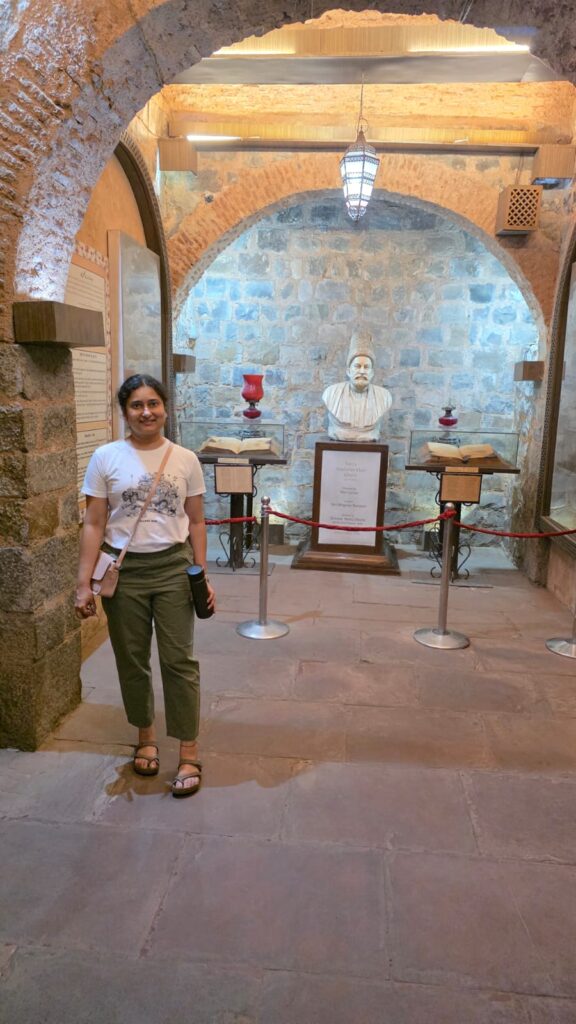
The supremely talented poet lost all his seven children during their infancy. He lived with financial difficulties, in rented accommodations including the last one.
Mirza Ghalib travelled across different towns especially Kolkata to appeal to the British Governor General to reinstate his pension, but all his efforts remained in vain. Our readings were interrupted by a grey colour shirt clad middle-aged man. He was smiling with a face covered with tiny pearls of sweat.
The man, working as the security guard of the museum had been away for a while leaving his plastic chair as a sign of his presence during the visiting hours ending by six in the evening. A poet himself, from a poor background uncertain of the longevity of his contract employment in the museum spoke about Ghalib’s life with ease. He enlightened us that the many of the beautiful and meticulous hand-written notes on display were written by a calligrapher and not by Ghalib himself.
Two youngsters entered the museum inquisitive about its contents. While they were studying the ancient home artifacts, the security guard recited a few of his original poems in Urdu. His recitation was rhythmic and the creative words flew out effortlessly. The meaningful recital about life’s realities brought tears into my eyes. He did not hold a social media account, but his talent reached the masses through people who filmed his solo performances amidst Ghalib’s relics. He recited a few of Ghalib’s shayaris with equal fervour.
One of the sentences on the board hung behind his plastic chair said that Ralph Russel, a British Scholar had said that Ghalib would have been recognised world over a long time ago, had his works been in the English language.
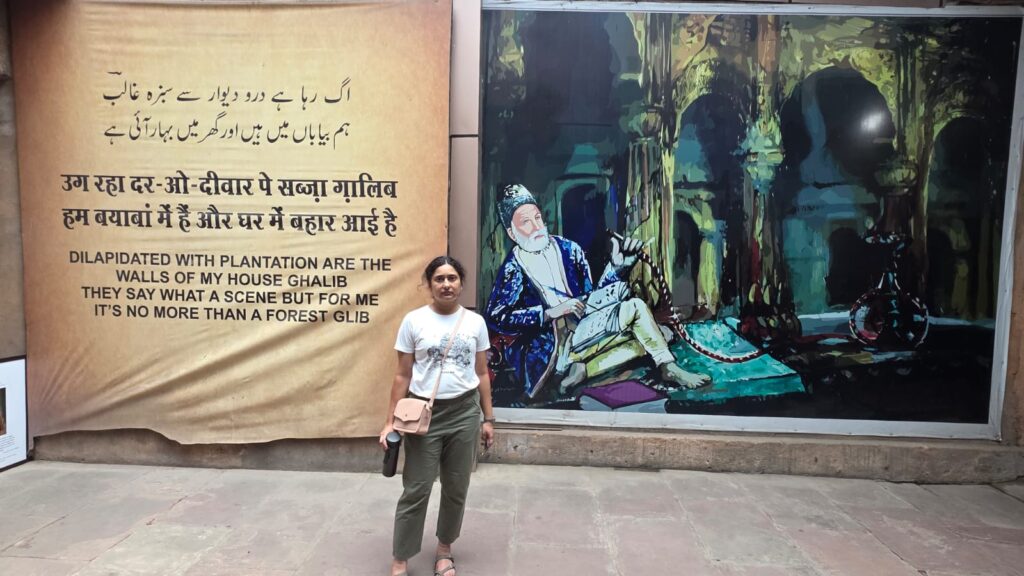
In the second room, out of the two, Mirza Ghalib’s works, published into several books were displayed inside a dust filled glass cabinet. Some of them appeared to be in tattered state. The bricked wall on the opposite side, displayed an enormous sized poster with one of Ghalib’s famous shayaris stating about the dilapidated condition of his home with weeds and stray animals while the world thought that he prospered
(Ug raha hai dar-o-diwar pe sabza Ghalib, hum bayaban mein hain aur ghar mein bahar aayi hai)
The other one on the other side caught the attention. It talked about Mirza Ghalib being asked about his identity and his helplessness when someone deliberately chooses not to know him.
(Puchte hain vo ki Ghalib kaun hai, koi batlao ki ham batlayein kya!)
While we stepped out of the small museum, the impact it carried on our minds could not be expressed in words.
As the afternoon sun began to recede, the population on the streets rose. A policeman was engrossed in his conversations with a man about his goods. We interrupted him several times to get the direction to the main street outside Ballimaran, but he did not take any notice.
After a few steps ahead, the wider roads with running cars clarified the direction. A man selling organic eggs was shouting at the top of his voice, attempting to win the prospects before they crossed towards the main street and vanished into the car parking lot.
Mirza Ghalib, also a talented letter writer had once written, “From thousand miles, talk with the tongue of the pen, and enjoy the joy of meeting even when you are separated.”
Ghalib’s mortal being ceased in the 19th century at Ballimaran, but he remains immortal with his writings conversing with the readers every moment, every day.
The visit to Ballimaran had ended but the journey to this complex landscape fostered a beginning to new explorations on another day like this.
Nagma Sinha is a senior executive at a multinational corporation who loves creative writing. She holds an MBA degree and is currently based in the Delhi NCR region. Her short stories have been published in Contemporary Literary Review India, Kitaab, Setu Bilingual, Modern Literature, Litbop, The Fairtales, The Omnibus Registry, Chewers by Masticadores and forthcoming in The Metaworker Literary Magazine.
Her works have also been considered for publication by Indian Review, Muse India, Roe River Review, Phenomenal Literature and Spark Magazine.
A curated list of her published pieces is available on her LinkedIn publications page https://www.linkedin.com/in/nagma-sinha/details/publications/.
Beyond fiction, she has written on politics, socio-economic issues, culture, and the arts on her website, nagmasinha.blogspot.com.
BUY BOOKS BY MIRZA GHALIB