






Amritesh Mukherjee from Team P3 was in conversation with Janaki Bakhle at the Jaipur Literature Festival, 2025.
We live in a world of binaries, a world of good and bad, that side and this side. Nuance dies a thousand times in our world of social media discourse and political propaganda. Nothing is untouched by this, especially a subject like history, which is talked about too much and understood too little. A great example of this is the discourse around Vinayak Damodar Savarkar. Janaki Bakhle’s Savarkar and the Making of Hindutva bridges that gap by tapping into the largely undiscovered (in the English world, at least) body of his Marathi writings and discourse.
At one point, when I asked her a comparative question about Hindutva then and the Hindutva of today, Janaki Bakhle promptly replied, “I don’t know today’s world at all. I’m a historian. I hang out in the 19th century. Ask me about the 19th century.” I had an insightful and fun conversation with her at the JLF earlier this year, where she talked about her book, about historical discourse, about her research, and the books that are near and dear to her. Edited excerpts:
In Conversation with Janaki Bakhle
Amritesh Mukherjee: How has your experience at the JLF been so far?
Janaki Bakhle: It’s been wonderful. I’ve listened to a lot of very good panels, and I’m just coming off one of my own, which was wonderful as well.
Amritesh: There has been a renewed focus on the study of Savarkar. For people who haven’t read your book, can you place where your book fits in the context? What kind of gaps does it fill?
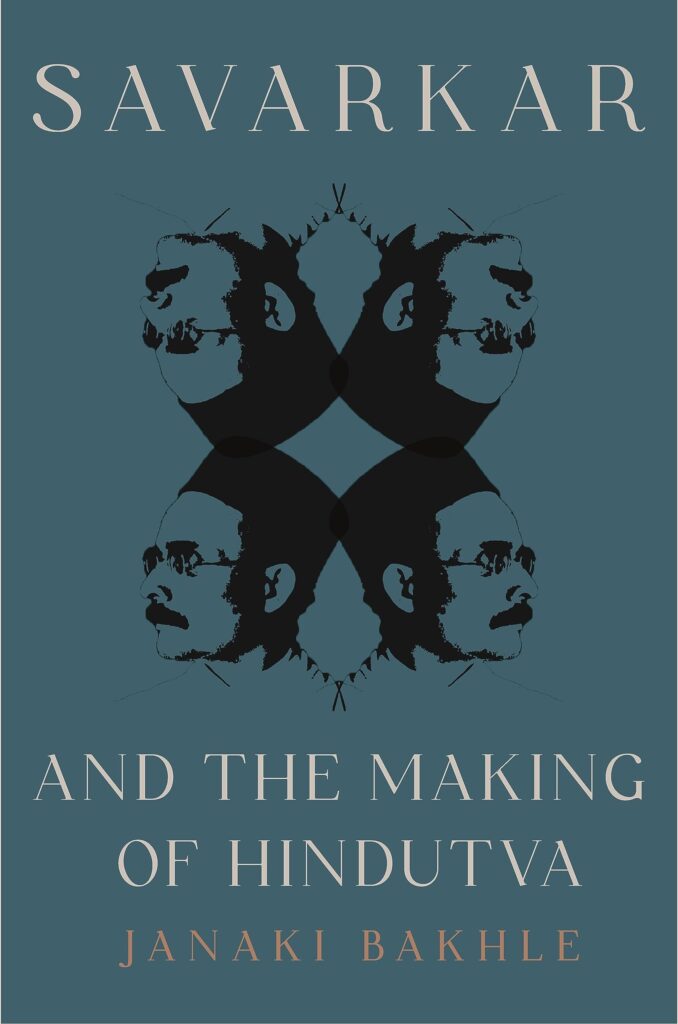
Janaki Bakhle: That’s a really good question. Is there anything new about Savarkar’s life that you’re going to find out from my book? No. That’s because Savarkar has been written about extensively long before I started to write about him, in English and in Marathi. The gap, as I saw it, was that the English literature on Savarkar pays absolutely no attention to anything he wrote in Marathi, and therefore scholars writing on Savarkar in English don’t even know that he was a poet. The scholars and non-scholars who write about Savarkar in Marathi are very well-versed with his Marathi writings, but less versed with the kind of scholarly literature on Indian history.
If you look at Savarkar only as the father of Hindutva, you sever him from his roots in Maharashtra and from a vast body of Marathi literary work.
Janaki Bakhle
So one of the things that my book is doing is trying to bring these two together to have a conversation, which makes one important corrective: if you looked at Savarkar in the national milieu, he’s the father of Hindutva, he’s the writer of Essentials of Hindutva, he’s seen as the father of right-wing Hindu nationalism, but he’s severed from his roots in Maharashtra. He is completely severed from his literary output in Marathi, which is a language that was dear to his heart, over which he had an extraordinary mastery, and in which he wrote not just prose but something like 100 poems.
So I think one of the things that I’m doing in this book is bringing two bodies of literature together to perhaps give you a slightly more complicated perspective on Savarkar than you’d find otherwise.
Amritesh: I was talking to Arghya Sengupta yesterday. He has written a book on the constitution, how the constitution is venerated, because of which there is no engagement with the constitution…
Janaki Bakhle: You should read Sandipto Dasgupta’s book called Legalizing the Revolution, which is one of the best books that has been written on the Indian constitution, where he doesn’t venerate it and he tells you a great deal about how all of the amendments to the constitution take away rights rather than put rights in, and the first one installs the rights of large landholders.
If you don’t take both the left and the right seriously, you don’t understand the appeal of an ideology like Hindutva—you only learn how to indict it.
Janaki Bakhle
Amritesh: So I feel like there are two binaries. I was listening to Rohit Lamba, who’s written this book with Raghuram Rajan, Breaking the Mould. He was talking about how in his classes, people are shooed away when someone talks of Savarkar because there’s this “you do not interact with him because he’s a right-wing figure,” and on the other hand, there’s this notion that he’s the god, he is everything. Was that something in your mind when you were writing that book?
Janaki Bakhle: Yes, very much so. That’s in my introduction: by and large, Savarkar is written about in partisan and polemical ways, and so in this book I’m trying not to be either partisan or polemical. I don’t approach Savarkar either as an antagonist or a devotee. I did not set out to write a biography of Savarkar. I set out to write intellectual history.
I set out to expand what we understand to be the terrain of Indian intellectual history. You have plenty of books on Gandhi, some on Nehru, you’ve got enough on Bose, you’ve got enough on Tagore. I think you never need another book on Tagore ever again. I’m a Bengali, I’m saying it with full knowledge that you’re a Bengali, and I have said this to every Bengali friend of mine: nobody needs to write anymore on Tagore.
But you get my point, which is that these are politicians, intellectuals, who were broadly speaking within the Gandhi–Nehru camp. What about Madan Mohan Malaviya? What about K. M. Munshi? What about any number of figures like that, all of the figures who were part of that conversation but were on the other side? We have a very incomplete understanding of Indian intellectual history if all we do is focus on one side.
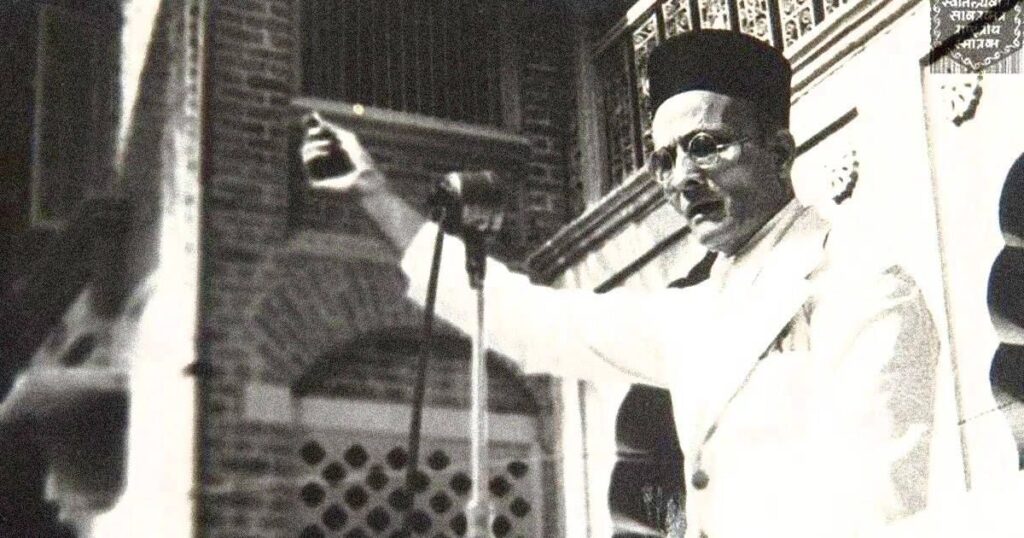
So one attempt in this book was to take a figure on that right wing and take him seriously. It has nothing to do with whether I agree with him or disagree with him. You write about somebody because they were historically important. In the American and the European academy, this is routine. Ian Kershaw writes two volumes on Hitler. Mussolini is written about. The right wing is written about. Father and son Macaulay thought Africans should return to the trees, but because of their importance in an emerging political discourse, they are treated seriously.
What took me aback was how powerfully Savarkar wrote against caste and against what he saw as Hindu stupidity, especially in the name of reform.
Janaki Bakhle
I set out to take seriously someone whose ideas were on the margins, but then they sat on the back burner and roared back into the center in 50 years. How did that happen? If you don’t take both left and right seriously, you do not understand the appeal of an ideology like Hindutva, and then the only thing you do is you indict. I’m not a judge. I’m not a jury, and I’m sure as hell not an executioner. I’m a historian.
Amritesh: You pointed out that his Marathi writings are usually not engaged with. Were there any surprises while you were working on his Marathi?
Janaki Bakhle: I didn’t come with preconceptions, but I was taken aback. I knew of Savarkar’s reputation in Maharashtra as a purogami, as a vidyanishta, a progressive rationalist, but what took me by surprise was reading his writings in Marathi on caste and his writings on the cow.
He writes a series of articles which are called Jati Nibandha: uproot it, eliminate jat. When he comes back to India, or when he’s brought back to India, the world has changed for him. Remember that he was taken off in 1910–1911. He is brought back in 1922, and it’s not the world that he left: the conversations about nonviolence; Gandhi is slowly taking over. After Tilak dies, there is a vacuum of a certain kind of Marathi Brahman leadership, and that’s the space that he will step into.
Tilak’s own son Shridhar Pant doesn’t take that role, but Savarkar does, and he inserts himself into a conversation that he does not inaugurate; it’s already there. Maharashtra has a very powerful anti-Brahman movement, and it also has a very powerful anti-untouchability and anti-caste movement.
So Savarkar positions himself somewhere in the conversation, which is neither Ambedkar’s point of view nor Gandhi’s point of view, and he takes as his target the Sanatani community. Not only does he explode the myth of caste, but he says right from the Vedic period, there is intermixing, and so there is no kind of pure caste. He will say ethnicity is progressive-looking and caste is regressive, so everyone’s caste should be one: Hindu.
“Look, we’re all Hindu, there’s no untouchable, there’s no vaishya, shudra, nothing, no 4,000 jatis.” That took me aback. It took me aback how powerfully he wrote against Sanatanis, how powerfully he wrote against what he saw as Hindu stupidity in believing things like cow urine is purifying. It was connected to the idea that if we didn’t reform that, Muslims were going to. That left me with something I needed to address: Is your social reform principled on its own, or is it instrumental? I don’t know any social reform that’s not instrumental. Is the feminist movement not instrumental? Was Gandhi’s social reform not instrumental? Was Bose’s not instrumental?
Is social reform ever not instrumental? Was Gandhi’s not instrumental? Was Bose’s? I don’t know any reform movement that isn’t.
Janaki Bakhle
The other thing that came as a surprise was his poetry. Marathi poetry can be divided into three categories: bhashya kavya, katha kavya, and bhava kavya, and Savarkar writes across the gamut. He writes from the powada, which is rustic, to fatkas and lavanis, which are decidedly not elite, to stuti, to arya, to stotra, to kavya. Other Marathi poets don’t do that. He writes in a pedantic Sanskritized tradition as well. The last of the Shastri poets is considered Mayur Pandit or Moropant, and Savarkar writes like him, composing poetry in that language as well. It struck me that people were surprised that Savarkar had even written any poetry at all.
So, in somebody like Savarkar, you had to bring three frames together: region, the nation, and the global, because Savarkar is operating in an underground world of global revolutionaries.
Amritesh: You’d planned to finish this book very quickly, but it went long. Moreover, since your last book was very different from this one, what was the process like?
Janaki Bakhle: It took a very long time. When it came to Savarkar, everybody had written about him. Setting aside the literature in English, what had been written about Savarkar in Marathi was voluminous. So I read my way through all of it.
But then I had to figure out what to do with this Marathi literature. I have read something like 250 Marathi biographies. Some are three pages. Some are a poem. Some are 25 pages. Some are 500 pages. I categorized it: scholarly works, and non-scholarly works, which I call the dakshina literature, like a guru dakshina that you write.
Recommended Reading: Simran Dhir: ‘I love that Delhi has a deep, visible history’
The other thing I discovered was that it was the same story over and over: the saintly sister-in-law, the naive bhau, the father, and the uncle dying of the plague. So I had to figure out why everybody is writing the same story, and I realized this is a form of commemoration that keeps Savarkar alive. So my question—how does an ideology roar back into the center when it’s been on the margins—this corpus made up part of that answer.
The other reason it took so long is that I had to get trained in Marathi poetry and Sanskrit. There’s not a single essay in Marathi that Savarkar writes that does not have quotations of Sanskrit. Savarkar knew the Bhavishya Purana, the Chandogya Upanishad, Mahabharat. I landed up becoming Savarkar’s research assistant because he would do one line from a puran, the second line from the Bhavishya Purana, so I had to finish the quote and ask why he’s not citing that second line: because the first line he could use to attack the sanatanis, but the second line would have attacked somebody he didn’t want to.
My question was: how does an ideology roar back into the center after sitting on the margins for fifty years?
Janaki Bakhle
It’s a sensitive topic, and Savarkar evokes a great deal of passion, negative or positive, and I wanted to make sure that my book did not feed any of those passions. It was a historian’s presentation of how you can write the intellectual history of a phenomenon or an ideology through an examination of one of its most extraordinary publicists. You can’t deny that he was important.
Amritesh: Can you recommend some books? They need not be around Savarkar, but books that have largely shaped you.
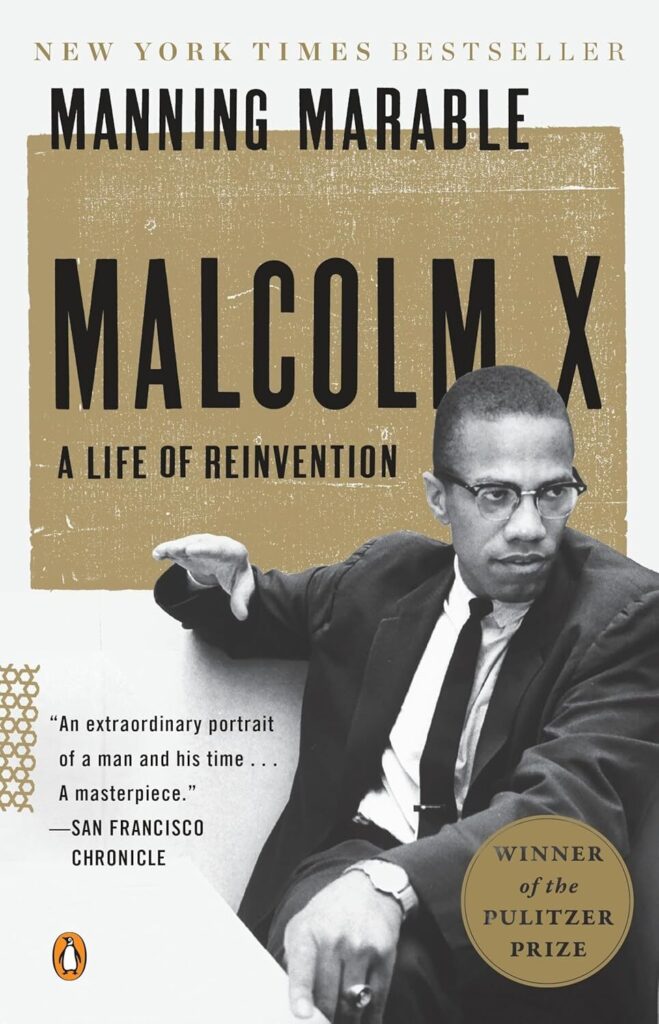
Janaki Bakhle: On the question of how to write the biography of somebody who controls how he is going to be disseminated: Manning Marable wrote a two-volume sociological examination of how Malcolm X tried to control the way his biography would be written, along with FBI papers that were released. Walter Isaacson’s biography of Steve Jobs, and Walter Isaacson refused to let Steve Jobs control the narrative. Robert Caro’s work on biography writing, biographies of Robert Moses.
Books that have shaped me: a couple written by my husband (Nicholas Dirks), on colonialism: Castes of Mind, The Scandal of Empire, and The Hollow Crown. My former teacher, Partha Chatterjee, not being completely bound by conventional Marxist categorizations, and to find that it’s in the spaces between those categorical formulations that history happens. Partha’s work is very influential for me, obviously subaltern studies. Those methodologically would be the books that were particularly useful for me.